

Table of Contents
- Verdict: Best Portable Power for Boondocking
- How to Calculate RV Power Consumption for Boondocking
- LiFePO4 vs NMC Battery Life for RVs: What Matters for Off-Grid Living
- Portable Power Station Solar Charging Speed: Real-World Recharge Times
- Key Specifications That Decide Your Choice
- Top Portable Power Stations for Boondocking
- Integrating Portable Power with Your RV's Electrical System
- Common Mistakes That Drain Your Battery Fast
- Frequently Asked Questions
Last Updated: October 2, 2026
Verdict: Best Portable Power for Boondocking
When boondocking far from hookups, your power system determines survival. Choosing the right portable power for boondocking 2026 means avoiding two common mistakes: buying far more capacity than needed, or underestimating daily drain.

Three factors matter: watt-hours (runtime), continuous output (simultaneous devices), and battery chemistry (lifespan). At PrimeRVGoods, we've tested field performance versus specs. The best systems balance capacity, weight, solar recharge speed, and cold weather reliability.
This guide covers systems that deliver real-world boondocking results, how to calculate power needs, battery chemistry differences, and which setup matches your travel style.
How to Calculate RV Power Consumption for Boondocking
Before buying portable power for boondocking, calculate your van's actual daily consumption, most people guess wrong.

List every device and its wattage (check the label), then estimate daily hours of use. A typical Class B van running a 12V fridge, LED lights, water pump, and chargers pulls 2,000-4,000 watt-hours daily.
Multiply wattage by hours and sum. Example: 150W fridge × 18 hours = 2,700Wh; add 500Wh lights, 400Wh pump, 300Wh devices = 3,900Wh minimum daily.
Don't buy exactly that amount. Add 30% buffer for cold weather losses and cloudy days. If you consume 4,000Wh daily, buy at least 5,200Wh capacity.
LiFePO4 vs NMC Battery Life for RVs: What Matters for Off-Grid Living
The battery chemistry in your portable power station determines how many years you'll actually own it. LiFePO4 (lithium iron phosphate) and NMC (nickel manganese cobalt) are the two main options, and they're not interchangeable.
LiFePO4 batteries tolerate deep discharge, handle cold better than NMC, and include integrated battery management.
NMC batteries are cheaper but degrade faster. They struggle in cold weather.
The best portable power for boondocking 2026 uses LiFePO4. The BLUETTI Elite 400 and Elite 200 V2 both use LiFePO4 cells for constant charge-discharge cycles.

Portable Power Station Solar Charging Speed: Real-World Recharge Times
Solar charging speed separates working systems from inadequate ones. Slow solar input means you lose power on cloudy days and never fully recharge.
If your system uses 4,000Wh daily with 5 hours of sun, you need 800W solar input to break even. Most stations accept 500-1,000W solar input, the real bottleneck.
The BLUETTI Elite 400 accepts 1,000W solar and fully charges in 6 hours.
If you have 4 hours of sun daily and draw 3,000Wh, you need at least 750W solar input to stay level.
Key Specifications That Decide Your Choice
Watt-Hours and Continuous Output
Watt-hours (Wh) measure total energy storage. Continuous output (W) measures simultaneous power delivery. Both matter for different reasons.
Watt-hours determine runtime; continuous output determines simultaneous devices. A 2,000Wh system with 1,000W continuous can't power a 1,500W microwave and 600W heater together.
For boondocking, continuous output should be 1.5× your largest load. A 2,000W AC needs 3,000W output.
Surge power (peak for seconds) differs from continuous output. It matters for startup current on compressors and motors, not sustained loads.
Inverter Type: Pure Sine Wave vs. Modified
Your inverter converts DC to AC power. Two types exist: pure sine wave and modified sine wave.
Pure sine wave inverters output clean AC matching grid power. All modern electronics work perfectly.
Modified sine wave inverters are cheaper but less efficient. They work for lights and fans but can damage sensitive electronics. For boondocking with daily laptop and phone charging, they're a false economy.
Cold Weather Performance and Thermal Management
Cold weather destroys battery performance. A system delivering 3,840Wh at 70°F might deliver only 2,000Wh at 20°F without proper thermal management.
LiFePO4 systems with integrated BMS handle cold better. The 12V 314Ah LiFePO4 Lithium Battery 200A BMS 15000 Cycles Off-grid/RV/2-Year Warranty/UL 1973 discharges down to -4°F.
Keep your system insulated or covered on cold nights. All systems lose capacity in extreme cold, minimize the loss.
Top Portable Power Stations for Boondocking
BLUETTI Elite 400: Maximum Capacity for Extended Trips
For weeks-long backcountry trips, the BLUETTI Elite 400 Portable Power Station | 3840Wh 2600W High Capacity Solar Generator is a strong option.
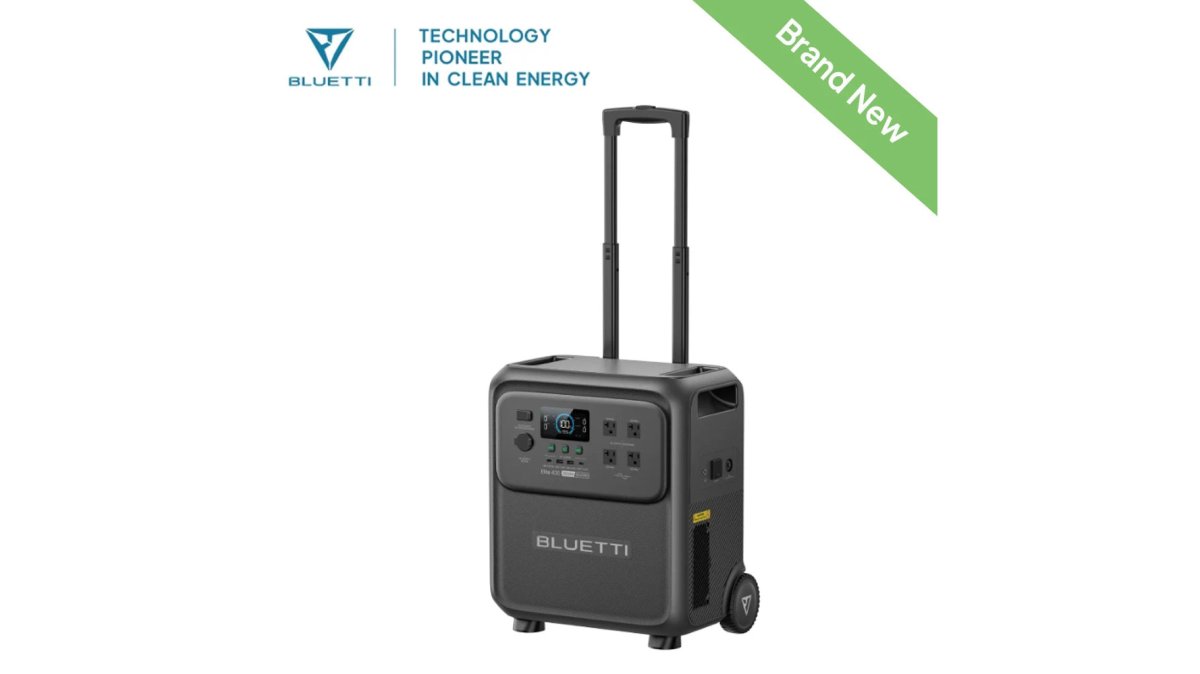
It accepts 1,000W solar input, full charge in 6 hours. AC charging: 80% in 1.9 hours. Pure sine wave inverter handles medical equipment and laptops. Wi-Fi/Bluetooth app control monitors status from inside your van.
The trade-off: 30-50kg (66-110 lbs) makes it stationary.
The 5-year warranty and LiFePO4 chemistry provide reliable power. Priced at $1,948.99.
Best for: Extended boondocking trips, full-time van life, larger vans with space to dedicate to power systems.
Elite 200 V2: Balanced Power and Portability
The Elite 200 V2 balances capacity and weight. At 2,073.6Wh with 2,600W continuous output, it handles most boondocking needs.
BLUETTI Elite 400 Portable Power Station | 3840Wh 2600W High Capacity Solar →
At 24.2kg (53.4 lbs), it's manageable. Solar input maxes at 1,000W; AC charging: 80% in 1.9 hours.
The 2,073.6Wh capacity is tight beyond 2-3 days without hookups. You'll need reliable solar or backup generator. Ideal for weekends or partial sun access.
6,000+ cycles = 15+ years of daily use.
Best for: Weekend boondocking, smaller vans, travelers who want capacity without maximum weight.
SolarPlay Q2402M: Fast Recharge and Multiple Outputs
The Portable Power Station 2500W/2300Wh Solar Generator with 4 AC Outlets (4800W Peak) Large Capacity Emergency Power prioritizes fast recharging.
Extensive ports: 4 AC outlets, 100W USB-C fast charging, 3 USB-C at 20W each, DC outputs. More flexibility for simultaneous devices.
LiFePO4 chemistry and 3,500+ cycles match premium systems. At $1,126.99, it undercuts the Portable Power Station Elite 200 V2, 2073.6Wh Battery 2600W AC Outlets, by $512.
Best for: Boondocking with variable sun exposure, fast turnaround between campsites, budget-conscious travelers who want premium features.
AC70: Lightweight Option for Solo Travelers
The AC70 Portable Power Station | 1000W 768Wh, Solar Generator is a portable power option for solo travelers with limited space.
The AC70 covers one full day without solar, or 2-3 days with sun. Solar input maxes at 500W; recharge takes 2.8-3.3 hours.
Pure sine wave inverter and LiFePO4 deliver reliability. Pass-through charging charges devices while the battery charges. 5-year warranty.
At $609.99, it's a cost-effective LiFePO4 option. Trade-off: capacity. You'll need reliable solar or frequent hookups.
Best for: Solo travelers, Class B vans, weekend boondocking, budget-conscious first-time buyers.
150W Peak Solar Generator: Minimal Setup for Short Trips
The 150W Peak Solar Generator with 30W Panel, 111Wh Portable Power Station is an entry-level portable power option. At 111Wh and 2.27 lbs, it's genuinely portable with a foldable solar panel.
Works for 24-48 hour trips running phones and laptops.
The solar panel recharges in 4 hours. At $147.99, it's a cost-effective entry point for short adventures.
Best for: First-time boondockers testing the lifestyle, emergency backup power, smartphone and laptop charging only.
Integrating Portable Power with Your RV's Electrical System
Your van likely has a 12V house battery. Connect the portable unit's 12V output to your van's 12V circuit for lights and pumps. Use AC outlets for high-draw devices. This hybrid approach provides redundancy.
For larger systems like the BLUETTI Elite 400 Portable Power Station | 3840Wh 2600W High Capacity Solar Generator or Portable Power Station 2500W/2300Wh Solar Generator with 4 AC Outlets (4800W Peak) Large Capacity Emergency Power, consider integrating solar charge controllers. The Solar Charge Controller 12V/24V/36V/48V Auto Max Solar PV 160V Regulator Supports Up to 12 Units in Parallel supports up to 12 units in parallel, meaning you can scale solar input beyond a single panel.
The 6000W Inverter and Solar Panel Kit 12V Battery Charger with 100A Controller Caravan Solar Power Generator offers another integration path: it converts your existing 12V house battery to AC power, which then charges your portable station.
Common Mistakes That Drain Your Battery Fast
Underestimating phantom loads. Your fridge runs 18 hours daily, not 12.
Ignoring battery management. LiFePO4 systems need a proper battery management system (BMS) to stay healthy.
Oversizing without solar. A 5,000Wh system is worthless if you can't recharge it.
Running AC loads at night. Your air conditioner and microwave draw massive power.
Not accounting for inverter losses. Pure sine wave inverters are 85-95% efficient.
Choosing portable power for boondocking comes down to matching capacity, recharge speed, and weight to your actual travel style.
Frequently Asked Questions
How many watt-hours do I need for a week of boondocking?
Most solo travelers need 1,500-2,500 watt-hours per week for essential loads: fridge, lights, laptop, and phone charging. A couple running a small space heater or air conditioning may need 3,500+ watt-hours. Calculate your actual consumption by listing devices, their wattage, and daily hours of use. The BLUETTI Elite 400 at 3,840Wh covers a week of moderate use without solar; smaller stations require daily solar recharge.
What's the difference between LiFePO4 and NMC battery life for RVs?
LiFePO4 units handle 3,000-15,000 charge cycles (10+ years). For boondocking, LiFePO4 is essential because you'll cycle the battery daily. All portable power stations in PrimeRVGoods's lineup use LiFePO4, making them suitable for extended off-grid travel without premature replacement.
How fast can a portable power station recharge with solar?
Solar recharge speed depends on panel wattage and sunlight. The Elite 400 fully charges in 6 hours with 1,000W solar input, while the AC70 reaches 80% in 2.8-3.3 hours with 500W solar. Cloudy days cut speed by 50-70%. For boondocking, pair your power station with at least 400-500W of solar panels. Pass-through charging (running devices while charging) extends recharge time but lets you stay powered continuously.
Can a portable power station run an RV air conditioner?
Most portable power stations cannot sustain an RV AC unit continuously. A typical RV AC draws 3,500-5,000 watts; the Elite 400's 2,600W continuous output handles brief startup surges but not sustained cooling. Use portable power for essential loads: fridge, lights, water pump, and charging devices. For AC or heating, rely on shore power or your RV's auxiliary generator.
What makes a portable power station suitable for boondocking versus car camping?
Boondocking stations must have high cycle life (LiFePO4), solar input capability, and sufficient watt-hours for multi-day off-grid use. They need pure sine wave inverters to safely power sensitive electronics like laptops and medical devices. The BLUETTI Elite 400 Portable Power Station | 3840Wh 2600W High Capacity Solar Generator and Portable Power Station Elite 200 V2, 2073.6Wh Battery 2600W AC Outlets, meet these demands; smaller units suit weekend trips only.